
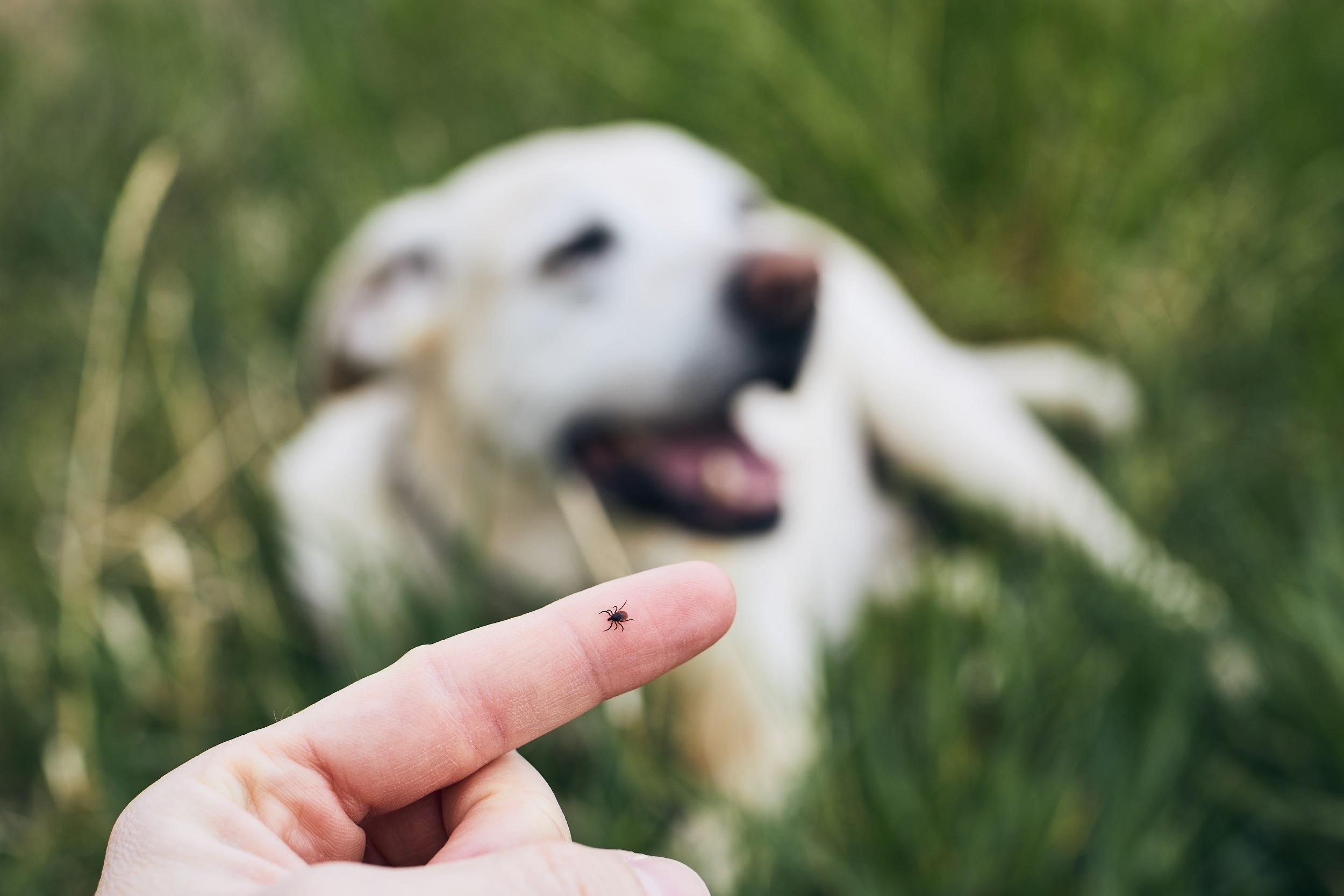
Ticks are a problem that our pets regularly face with the arrival of warmer weather. They belong to the group of parasitic mites and feed on the blood of dogs and cats, after attaching to them. That is why it is extremely important to prevent the appearance of ticks through regular pet control after walks and other outdoor activities.
Your pet can get ticks while walking in nature, through forests, fields and gardens, but also in open urban areas such as parks. After landing on your pet's fur, the tick goes in search of an area with thin skin to bite and attach itself to a new host.
The first ticks can be expected at the beginning of March, with the onset of warmer weather, until late autumn. The change of rain and sun, which is characteristic of spring and autumn, creates ideal conditions for their development, so these are also the periods when pets suffer the most tick bites.
What to do after a tick bite?
The big danger that ticks bring are the diseases and infections that pets can get from them. If we remove the tick in the first 48 hours after being attached, the probability that the disease will be transmitted is the lowest. This should be remembered as an important characteristic, considering that ticks can stay on the body from 2 to even 25 days.
If you notice a tick on your pet's body, never soak it with alcohol, paraffin, ether or other chemicals, as this will cause the tick to vomit and increase the likelihood of transmission. The only safe way to remove ticks is by using them tweezers, by bringing the tweezers as close as possible to the skin of your pet, carefully grasp the tick, so as not to press its stomach and tear off the upper part of the body, which could remain in the pet's body, and pull it out. Special attention should be paid to this occasion does not press on the stomach of the tick, because the contents could be regurgitated into the bloodstream of the animal to which it is attached. After removing the tick, disinfect your pet's skin with alcohol. If you notice a worsening of your pet's health in the days after tick removal, be sure to visit a veterinarian.
What diseases can be transmitted by ticks?
Ticks can be carriers of dangerous diseases while in contact with a pet's bloodstream. In most geographic areas, less than half of ticks are carriers of infection.
In our climate, 3 most common tick-borne infections are:
- Babesia - a protozoan that parasitizes and attacks the dog's red blood cells, causing anemia and high fever.
- Lyme disease - it is also transmitted to pets through ticks and infection with this bacteria leads to high fever, joint swelling and lameness, weakness and loss of appetite.
- Ehrlichia - a microorganism that attacks the white blood cells of dogs and leads to swelling of the lymph nodes, weakness, swelling of parts of the body, reduction of platelets, and therefore bleeding.
Prevention, detection and treatment of tick bites
It was observed on the territory of Serbia increase in the number of infected pets diseases transmitted by ticks. Owners often do not notice the first signs of infection, which may indicate the existence of parasites in the body, such as tapeworms and other worms, which can lead to deterioration of the pet's health.
Dogs and cats often tolerate these infections without showing any symptoms symptoms and precisely because of this, owners must be extra careful. If the pet has:
- appetite disorder
- elevated temperature
- change in urine color
- malaise and sluggishness
- mucus or blood in the stool
- change in the color of the mucous membrane
- weight loss or swelling
- loss of hair or its quality
... their state of health must be checked by a veterinarian immediately.
After every walk, don't forget to check your pet, its most sensitive parts like ears and neck, to make sure there are no ticks. The health of pets is just as important as the health of family members, which is priceless.
Because they deserve it.